


Offshore & Marine
Offshore decommissioning and marine demolition.
Coastal jetties, dockside structures, offshore decommissioning and tidal working — methods that deliver inside marine and weather constraints.
Marine and offshore demolition is dimensioned by constraints the inland industry rarely meets: tidal windows that govern when work can happen, weather windows that govern when vessels can mobilise, and decommissioning regulations that govern what condition the asset has to be left in. The methods that work onshore aren't all transferable — the saline environment, the lift-plan complexity, the limited working envelope on a deck or jetty all narrow the choice.
- Tidal-window aware
- Marine-compatible methods
- Weather-window mobilisation
- Decommissioning regulation compliance
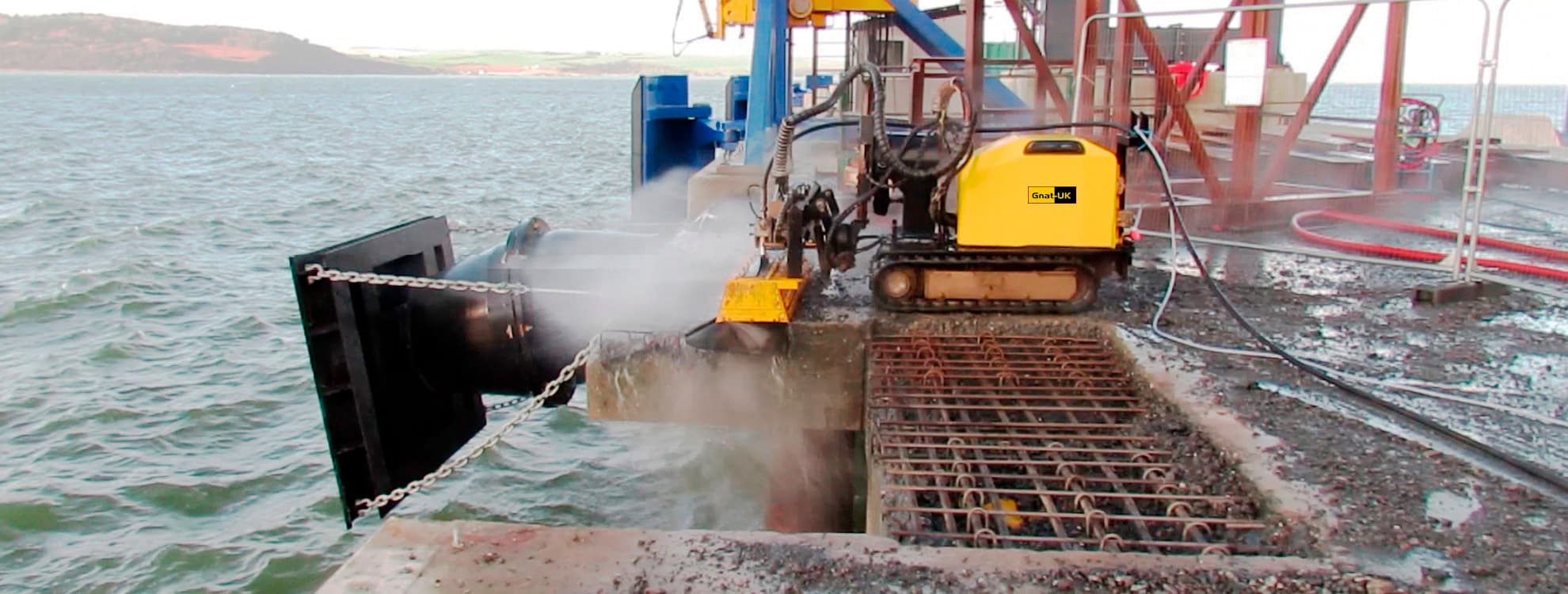
GNAT UK has delivered marine demolition for coastal jetty refurbishment, dockyard concrete works, North Sea infrastructure and marine-adjacent decommissioning. The dominant methods are hydrodemolition (selective marine-concrete removal, with water as the working fluid the structure already lives in), diamond wire cutting (large-section cuts on platforms and substructures), and cold cutting (spark-free isolation of pipework in marine atmosphere).
What makes marine work different is the operational pattern. Mobilisation is by working boat or barge for offshore, by HGV plus crane for jetty work — both governed by weather and tide. The team often works compressed-shift patterns to maximise on-station productivity. Waste management has to handle saline-contaminated material; PPE and atmosphere monitoring have to handle marine humidity. We resource the project for the working environment, not against it.
What makes this sector different
The constraints that shape every method choice.
Tidal-window scheduling
Method, plant positioning and crew rotation defined around the tidal cycle — productive hours sit inside the working window, support tasks fill the dead time.
Marine-compatible methods
Hydrodemolition and diamond cutting use water and abrasive — both marine-compatible. Cold cutting handles spark-free isolation in marine atmosphere where hot work is restricted.
Vessel and lift-plan integration
For offshore work, plant mobilisation joins the wider lift plan and SIMOPS schedule — not a separate workflow bolted onto the end.
Disciplines applied
The methods that anchor in this sector.
Each linked discipline covers the technique in full — equipment, applications, where it fits, where it doesn't.
Discipline
Hydrodemolition
Non-percussive concrete removal — preserving structure and eliminating vibration.
Discipline page →
Discipline
Diamond Drilling & Sawing
Precision cutting in reinforced concrete and structural elements.
Discipline page →
Discipline
Abrasive Cold Cutting
Spark-free cutting for volatile and safety-critical environments.
Discipline page →
Discipline
Robotic Demolition
Remote-operated machines for confined-access, structural-removal, and high-risk environments.
Discipline page →
Sub-sectors covered
Where offshore & marine work happens.
- Offshore platform decommissioning
- Coastal and harbour jetties
- Dockyard concrete works
- Marine pipeline tie-ins and isolation
- Sea-defence and coastal protection works
- Subsea pipeline preparation cuts
On site
Project imagery from the sector.
Additional on-site photography from recent schemes — supplements the case studies below.
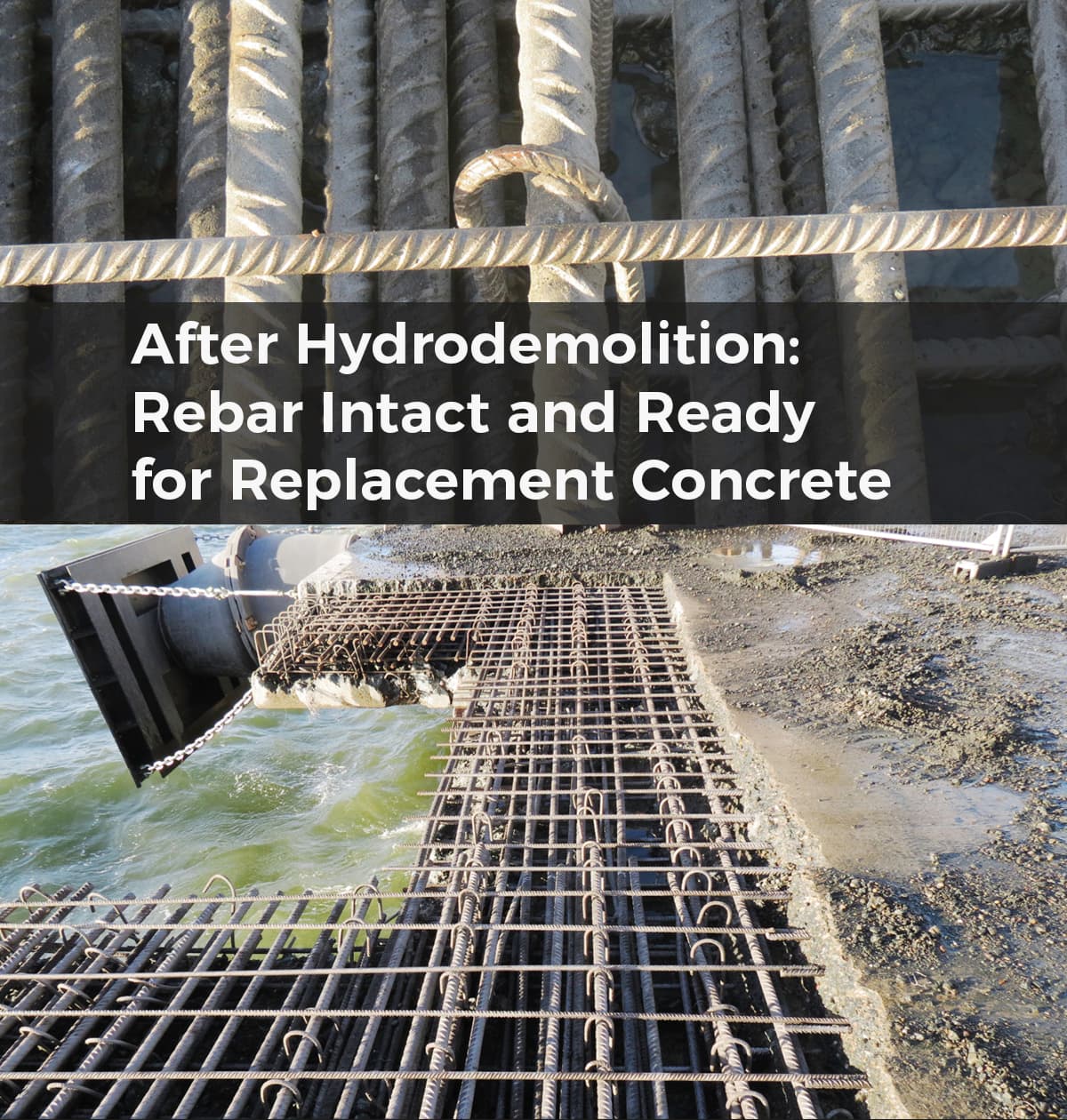
After hydrodemolition — rebar intact and ready for replacement concrete 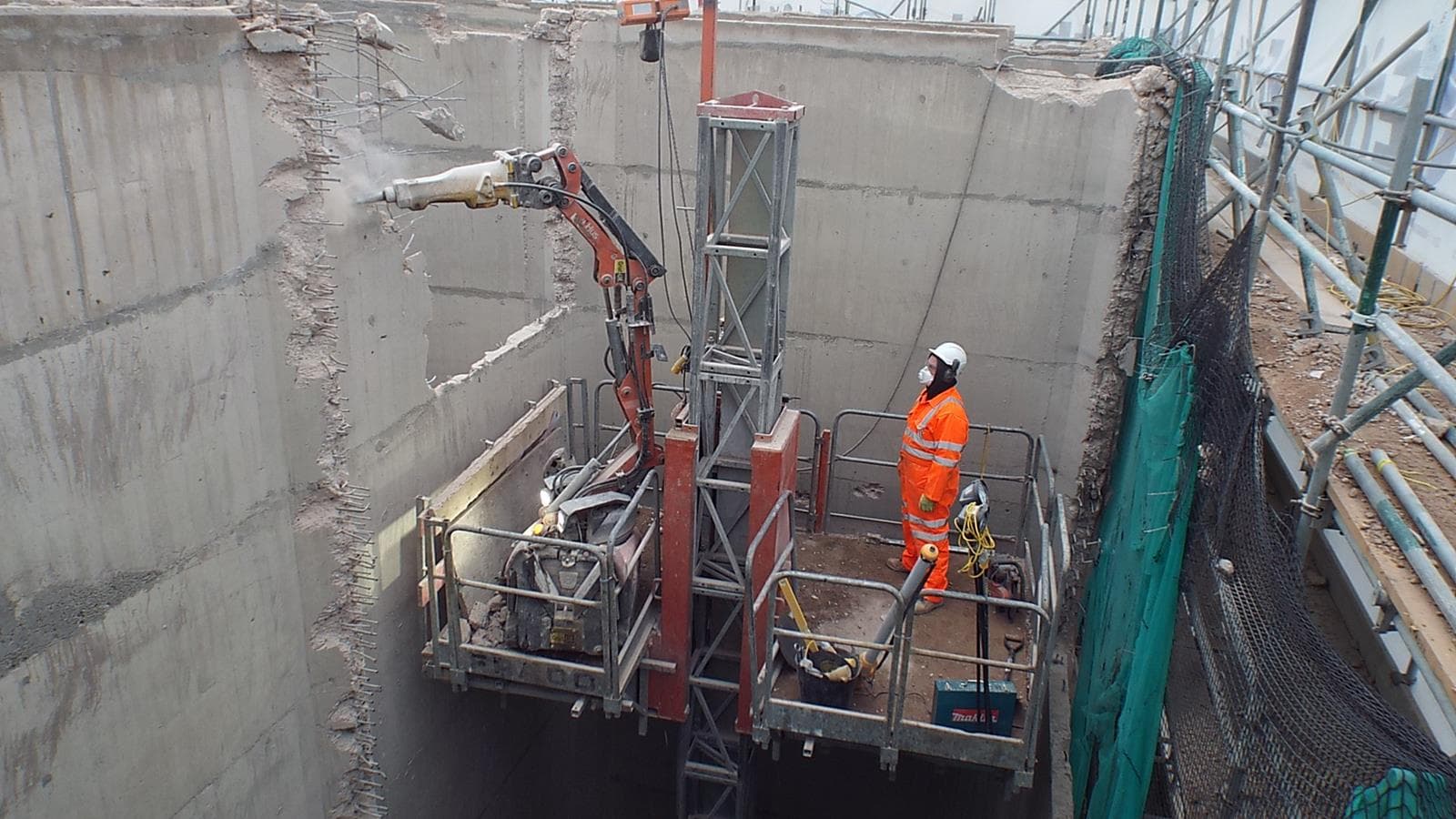
Confined-access concrete removal in a coastal excavation
Documented projects
Offshore & Marine case studies on file.
4 projects in this sector — each with the method statement, the equipment used, and the outcome.
Project · 1 December 2021
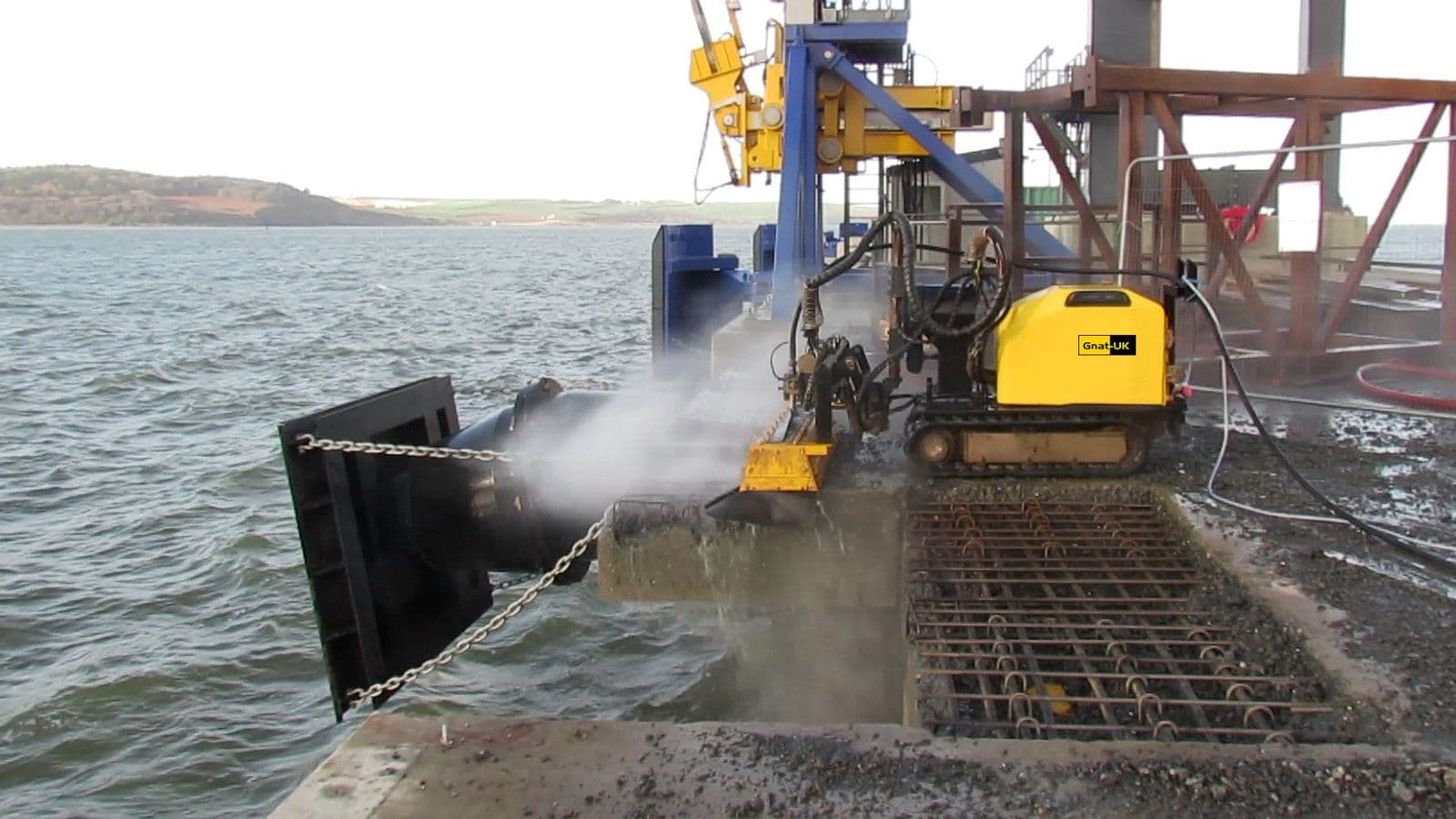
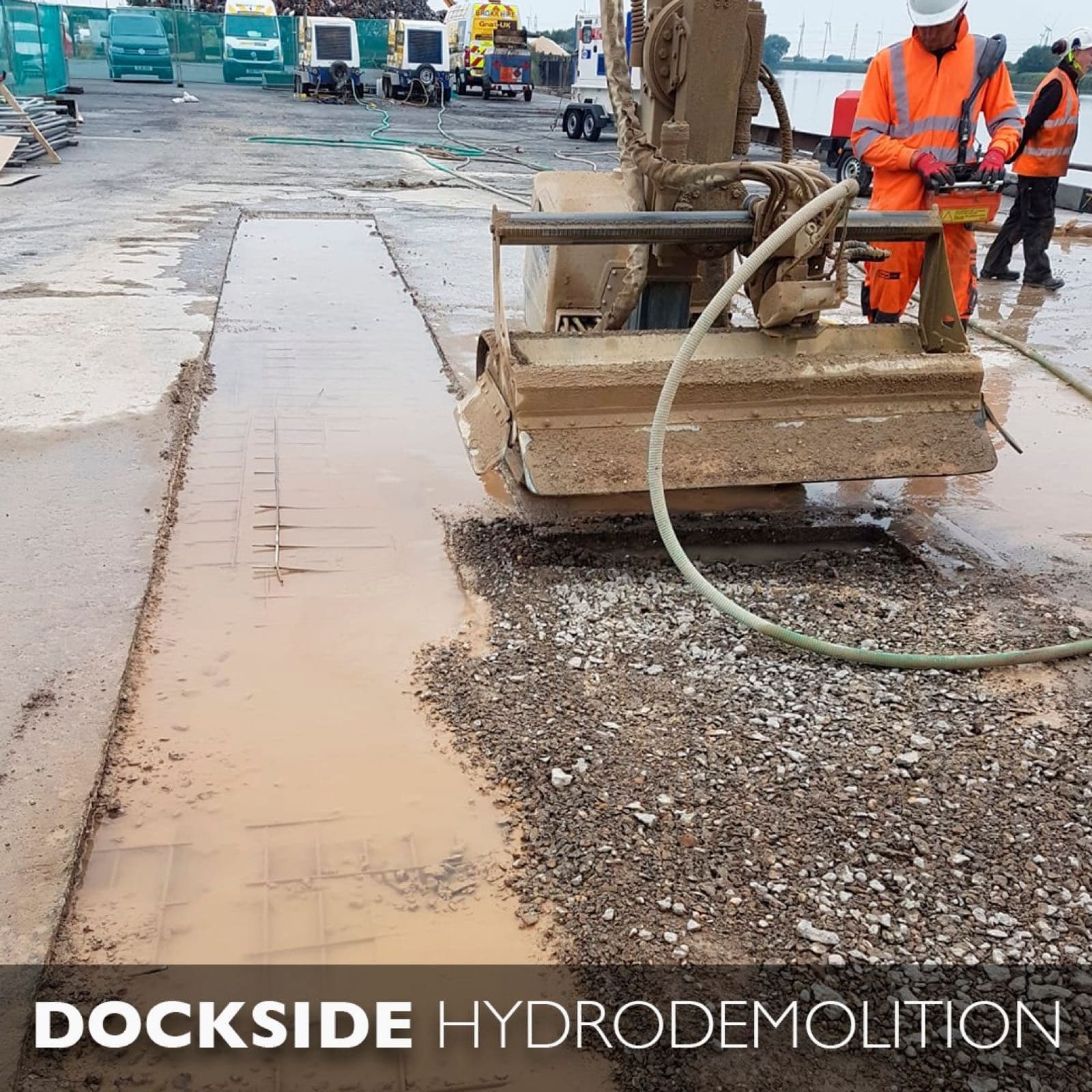
Conjet Hydrodemolition on a North Sea Coastal Jetty
A Conjet hydrodemolition robot stripped degraded concrete from a working North Sea jetty deck while preserving steel substructures and the marine environment.
Method · 28 February 2022
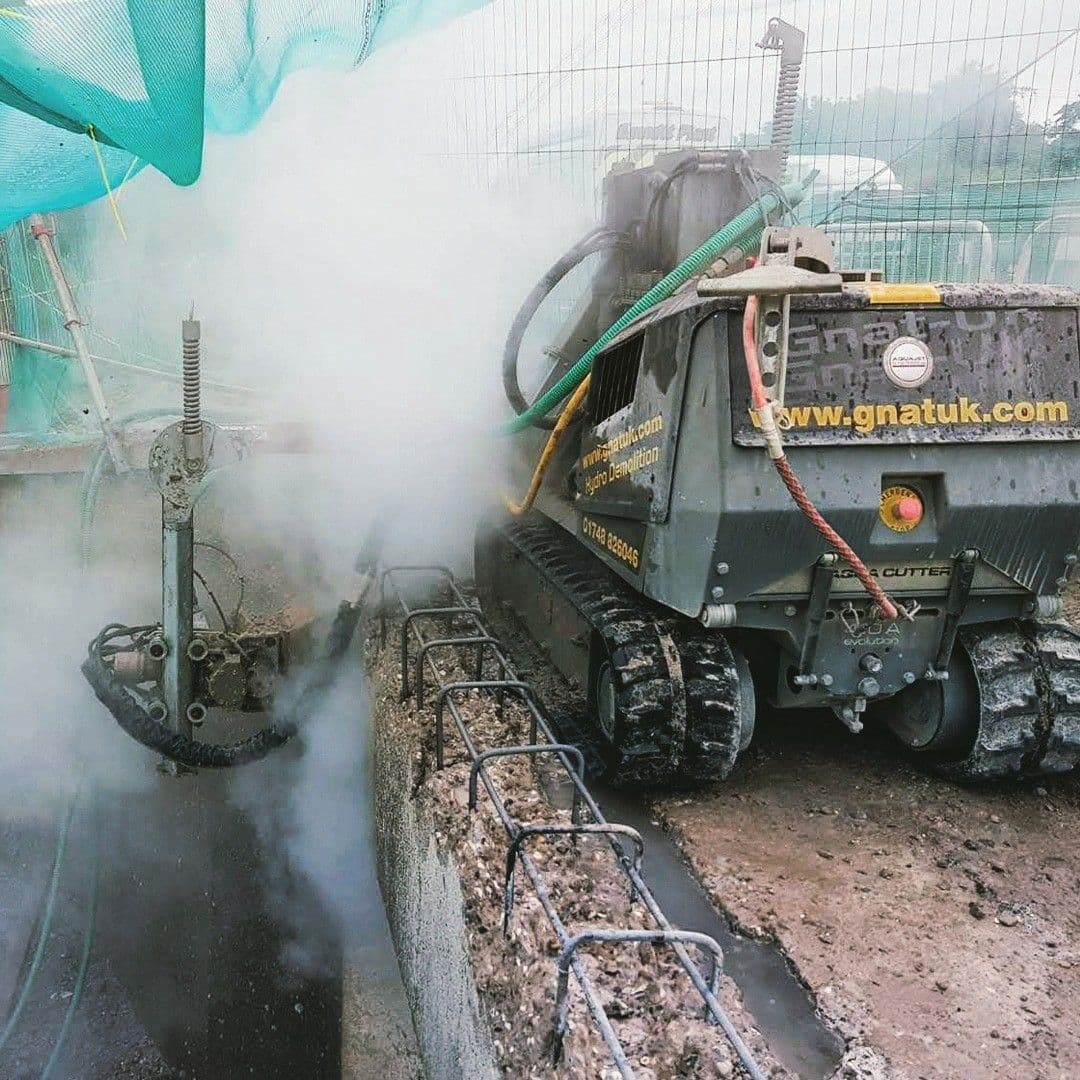
Bulk Hydrodemolition on Coastal and River Dockyards & Jetties
Aquajet and Conjet robots with boom extensions accurately remove defective concrete from jetty decks, sides and undersides — even in changing North East coast weather.
Project · 6 December 2021
Aquajet Hydrodemolition Robot Deconstructs a Motorway Bridge Parapet
An Aquajet hydrodemolition robot deconstructing a motorway bridge parapet prior to refurbishment.
Project · 12 June 2023
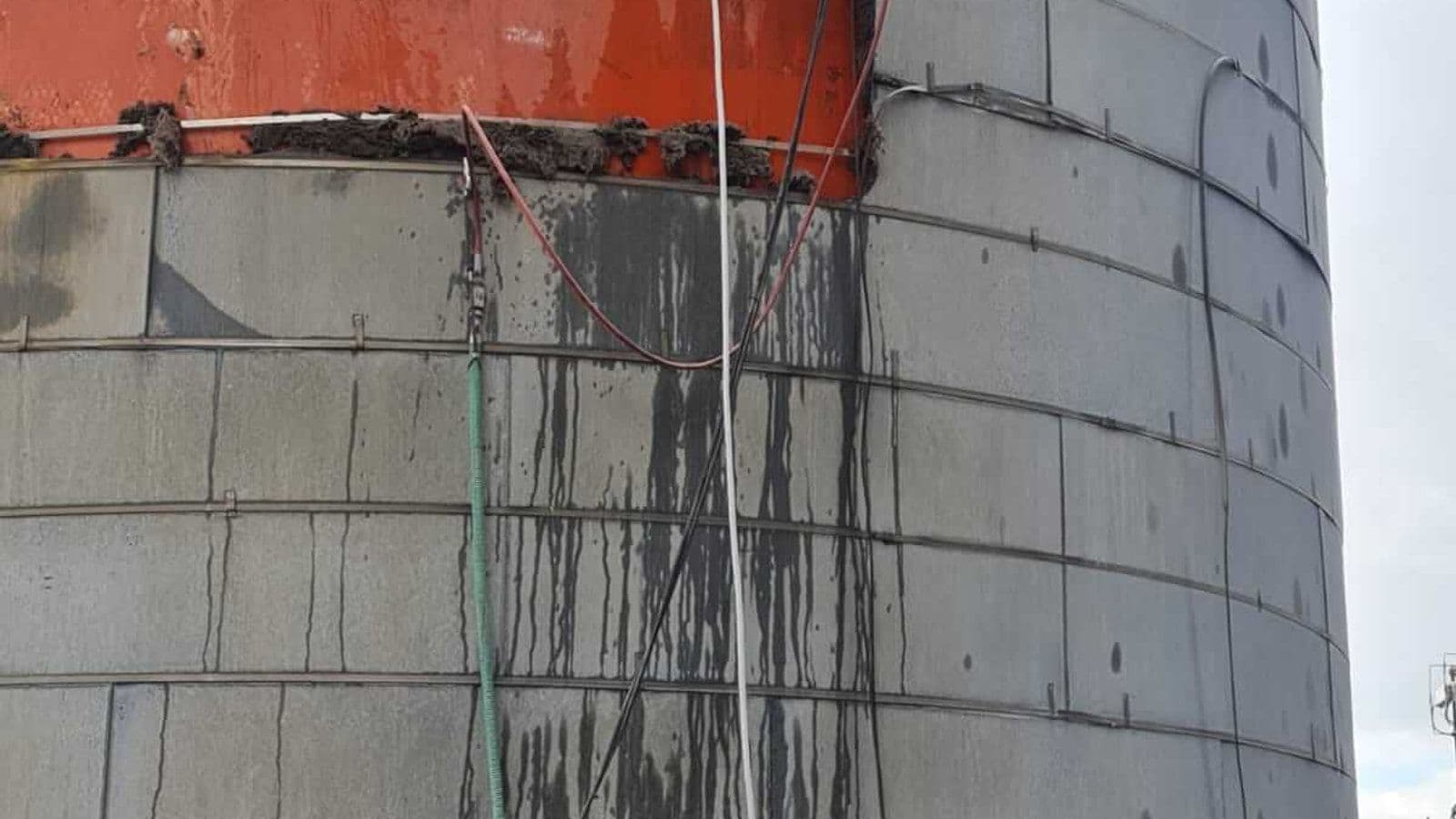
Cold Cutting and Brokk 800 Clear 2000m³ of Solidified Oil Sludge
Abrasive cold-cutting opened a safe access route into a volatile oil tank so a Brokk 800 Diesel could remove over 2000m³ of solidified sludge.
FAQ
Offshore & Marine — common questions.
Yes — typically via the asset operator's mobilisation routine (working boat or vessel, helicopter for crew), with plant containerised for offshore deployment. We work to the operator's permit-to-work, SIMOPS and lift-plan regime; method statement integrates with the wider decommissioning programme.
Programme is sized against the tidal cycle and a realistic weather-availability assumption for the season. Stop-work triggers (wind, swell, visibility) are named in the method statement; the team works compressed productive hours when the window is open.
Cutting and removal methods integrate with the wider decommissioning plan and OSPAR-compliant disposal strategy. We are not the regulatory lead on a decommissioning programme — that sits with the asset operator — but our methods and waste-management approach are dimensioned to fit the regime.
Subsea cutting (genuinely underwater, with diver or ROV support) is delivered with specialist subsea-cutting partners under our overall scope where required. Most of our marine work is above the waterline — jetties, dockside structures, platform superstructure — where our standard methods apply directly.
Marine or offshore brief in early planning?
Mobilisation logistics and weather-window planning shape the method. Bring us in before the lift plan and decommissioning sequence are locked — method changes after that are an order of magnitude more expensive.