

Petrochemical & COMAH
Specialist demolition for COMAH-regulated sites.
Petrochemical, oil & gas, refining — spark-free, ATEX-compliant methods built around DSEAR and major-hazard safety regimes.
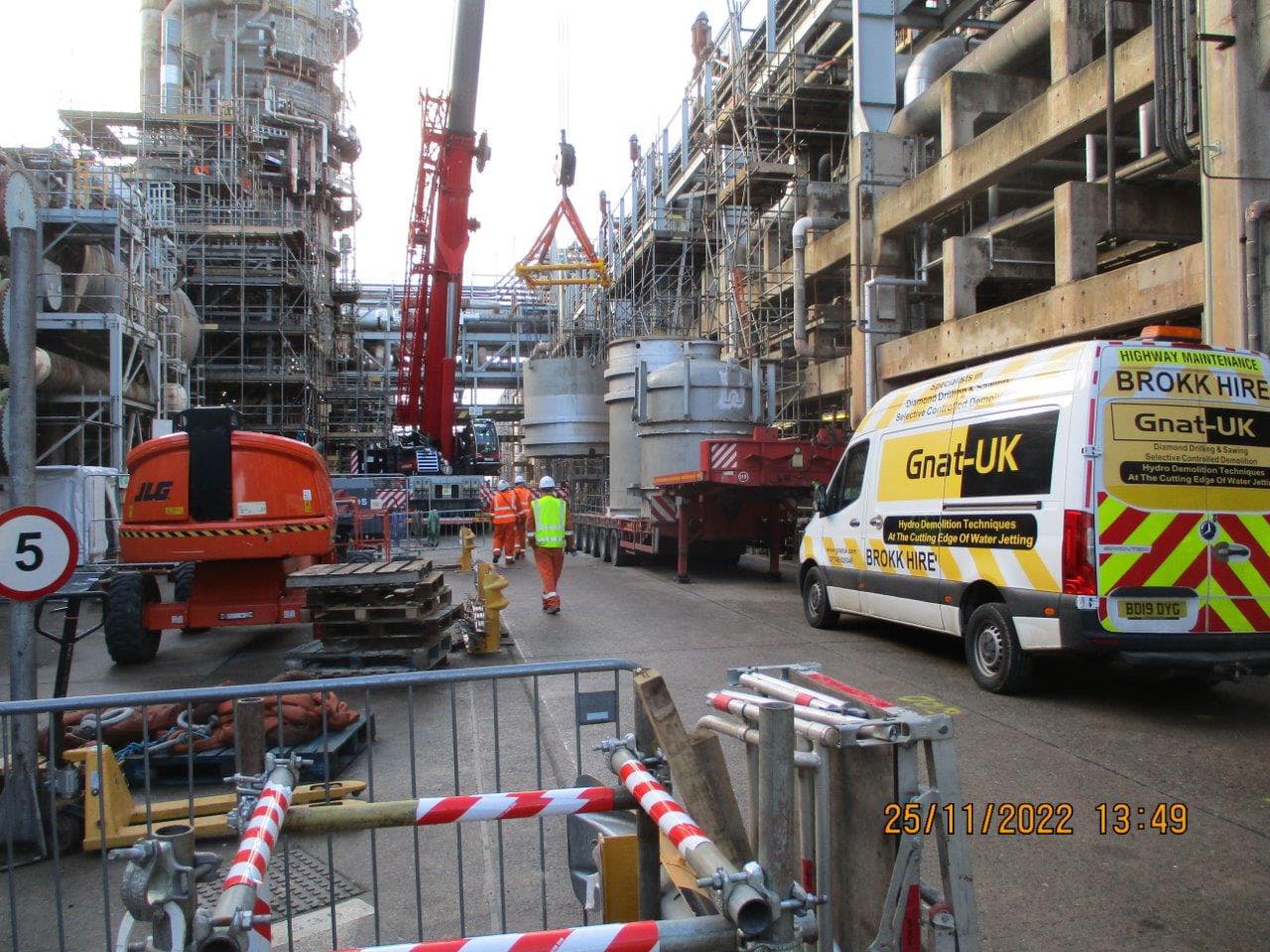
Demolition on a COMAH-regulated site is unlike any other discipline. The Control of Major Accident Hazards regulations sit on top of every method choice — no flame, no spark, no vibration into adjacent live process equipment, full atmosphere monitoring, permits-to-work that take longer to write than the work takes to complete. Pick the wrong method on a petrochemical site and you don't just lose a programme; you lose the licence to operate.
- Spark-free isolation methods
- ATEX-zone-compliant kit
- DSEAR documentation included
- Full operator-competency chain
GNAT UK has worked on Tier-1 and Tier-2 COMAH sites including refineries, gas-processing terminals, chemical works and oil-and-gas storage. The work splits two ways: surgical isolations (where a section of live plant needs to come out without flame) and full-asset decommissioning (where a redundant unit is dismantled while the rest of the site stays operational).
The methods that apply here are deliberately narrow. Abrasive cold cutting delivers spark-free isolation of pipework and pressure vessels. Hydrodemolition removes concrete without percussion in proximity to live process equipment. Robotic demolition keeps operators out of confined or contaminated zones. We will not use hot work, conventional cutting or impact breaking on a COMAH site unless the area has been formally certified gas-free and the permit explicitly authorises it.
What makes this sector different
The constraints that shape every method choice.
Spark-free as a starting point
Abrasive cold cutting and hydrodemolition are inherently no-spark, no-flame methods — the safe default before any hot-work permit is even discussed.
DSEAR documentation included
Dangerous Substances and Explosive Atmospheres assessment, atmosphere monitoring plan and zone-specific equipment ratings written into every COMAH-site method statement.
Operator competency, audited
Operators carry CCDO, CSCS, IPAF, PASMA plus discipline-specific cards (Brokk, WJA hydrodemolition, abrasive-cutting); records returnable on request for any client PQQ.
Disciplines applied
The methods that anchor in this sector.
Each linked discipline covers the technique in full — equipment, applications, where it fits, where it doesn't.
Discipline
Abrasive Cold Cutting
Spark-free cutting for volatile and safety-critical environments.
Discipline page →
Discipline
Hydrodemolition
Non-percussive concrete removal — preserving structure and eliminating vibration.
Discipline page →
Discipline
Robotic Demolition
Remote-operated machines for confined-access, structural-removal, and high-risk environments.
Discipline page →
Sub-sectors covered
Where petrochemical & comah work happens.
- Oil & gas terminals and storage
- Refineries and downstream processing
- Petrochemical plant and chemical works
- Gas-handling and LPG infrastructure
- Process pipework isolation and tie-ins
- Pressure vessel and tank decommissioning
Documented projects
Petrochemical & COMAH case studies on file.
4 projects in this sector — each with the method statement, the equipment used, and the outcome.
Project · 12 June 2023
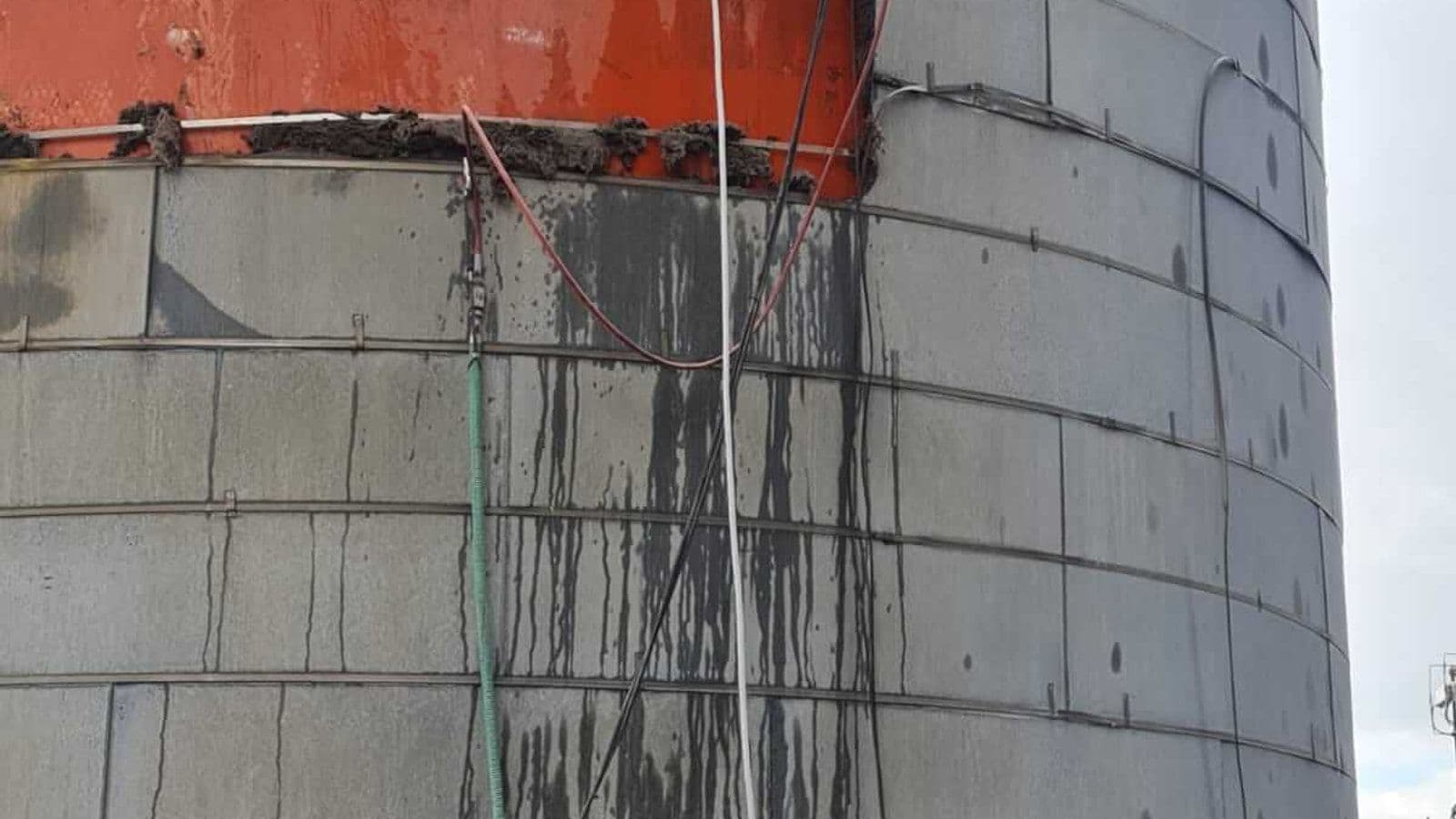
Cold Cutting and Brokk 800 Clear 2000m³ of Solidified Oil Sludge
Abrasive cold-cutting opened a safe access route into a volatile oil tank so a Brokk 800 Diesel could remove over 2000m³ of solidified sludge.
Method · 16 February 2023
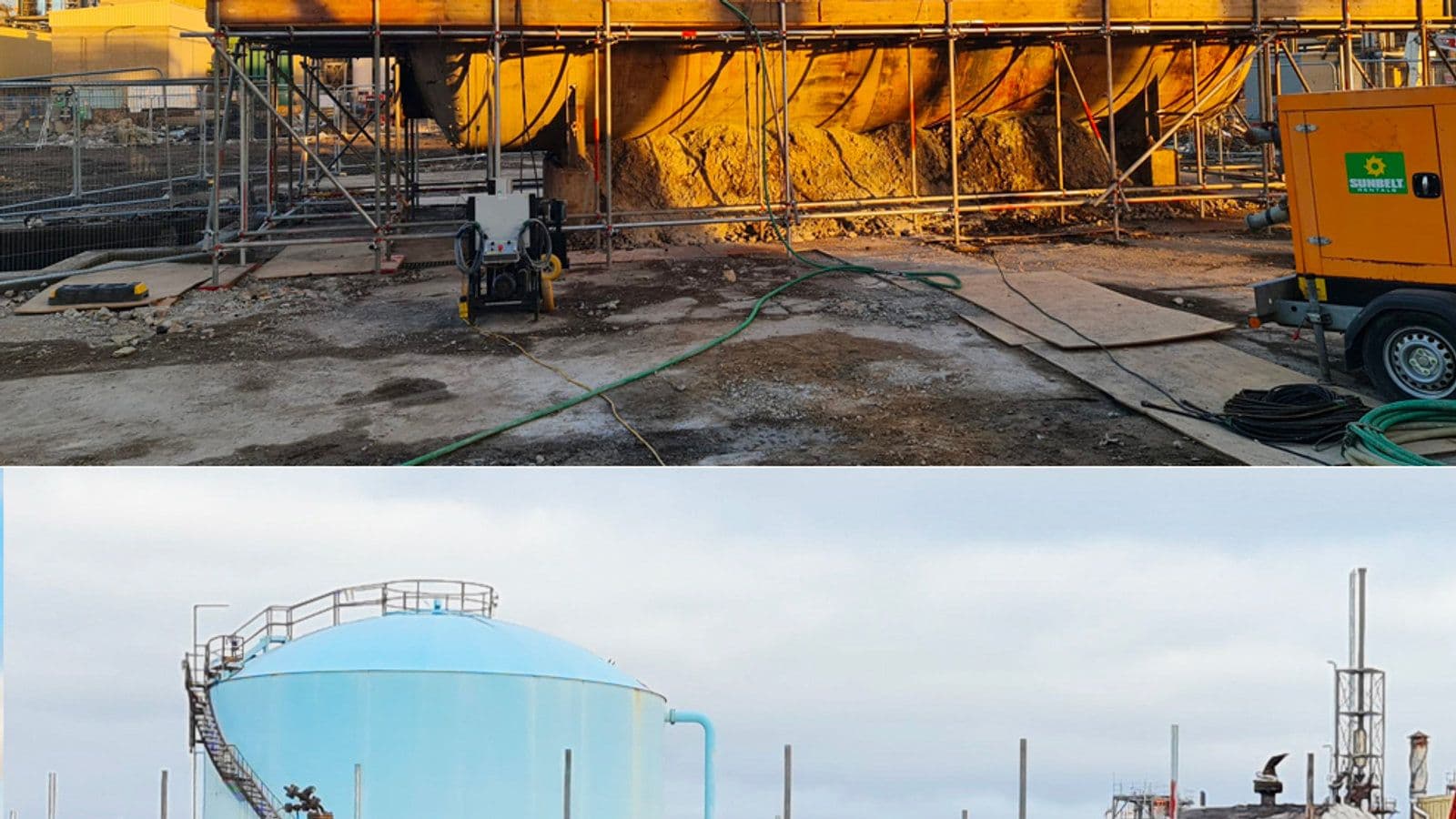
Abrasive Cold Cutting for Volatile Pressure Vessels
High-pressure hydro-abrasive cutting on track-based manipulators safely deconstructs volatile chemical vessels with no spark or heat risk.
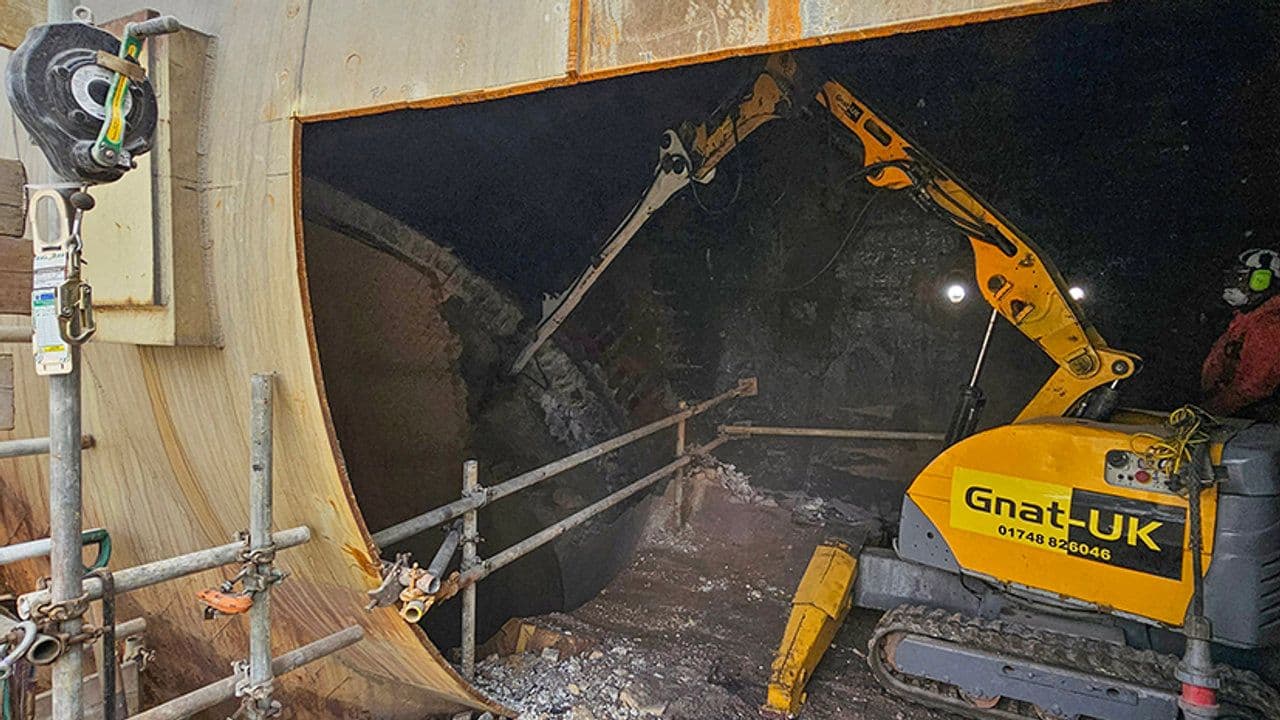
Project · 1 October 2025
Precision Cold-Cutting & BROKK Debricking within the Complex Geometry of a Large Refractory Vessel
A highly complex project: precision abrasive cold-cutting on a massive industrial vessel, followed by a full robotic debricking of its interior.
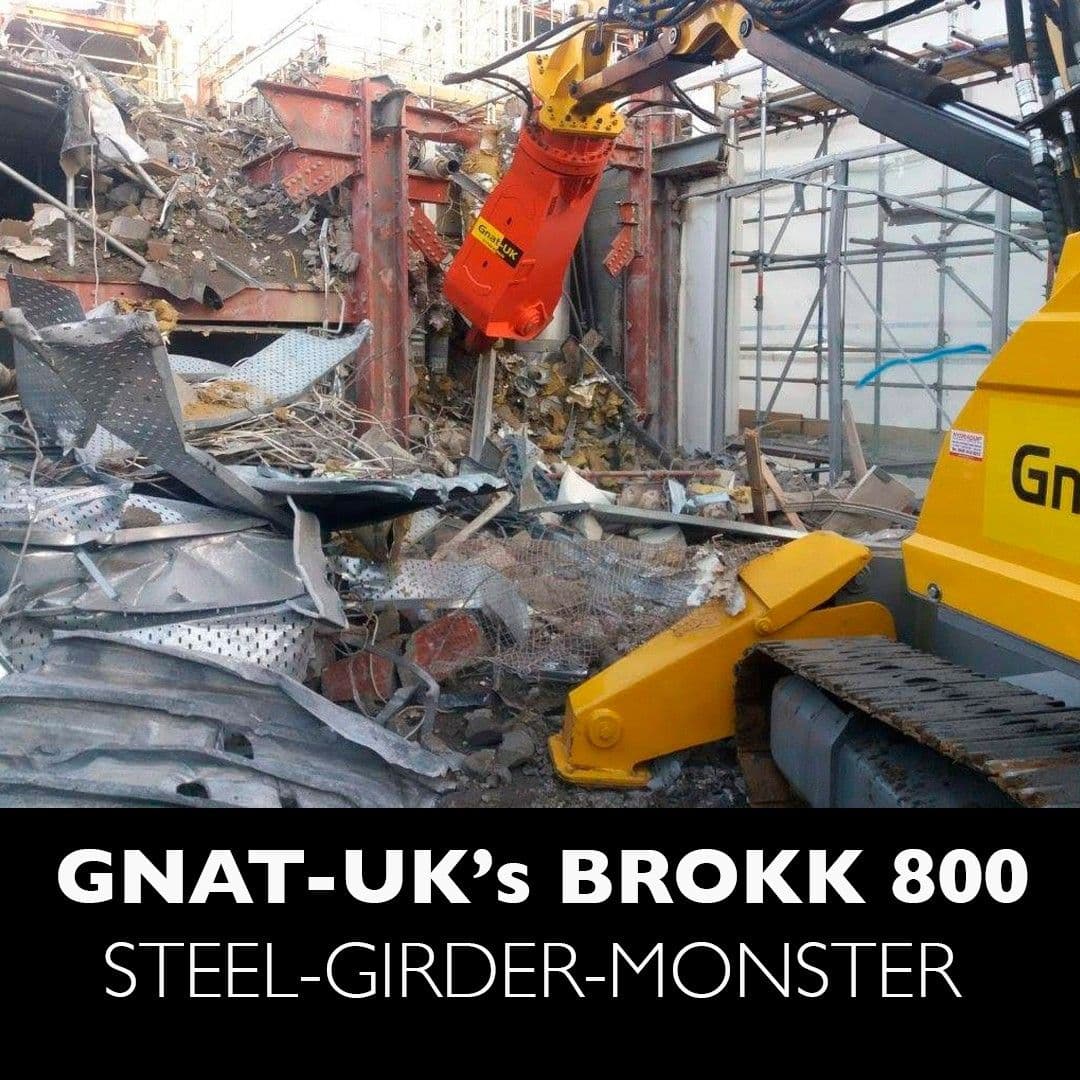
Method · 5 March 2022
Brokk 800 with Atlas Copco Steel Shears: Girder & Trunking Removal
Brokk 800s with Atlas Copco steel shear attachments cutting through chunky girders, metal trunking and conduit on factory decommissioning.
FAQ
Petrochemical & COMAH — common questions.
Yes. GNAT UK Limited holds CHAS Accredited Contractor, Constructionline Gold Member, Achilles BuildingConfidence Audited and SSIP Acclaim Accreditation — the standard pre-qualification expected of demolition supply-chain on Tier-1 and Tier-2 COMAH sites. Certificates and current insurance documents are returnable on request.
Yes — equipment specification matches the zone classification. Cold-cutting and hydrodemolition kit can be configured for Zone 1 and Zone 2 operation; robotic demolition machines run from remote control well outside the hazardous zone. We carry the equipment certifications and operator records to demonstrate compliance.
We don't propose hot work as a default on COMAH sites. Where the brief or programme makes it unavoidable, it follows the site's hot-work permit regime with full atmosphere monitoring and fire-watch — and only after we've exhausted the no-flame alternatives.
Pre-decontamination is part of the method definition. Sludge, hydrocarbon residue and chemical contamination are removed and disposed of via licensed waste streams before the cutting work begins. Atmosphere monitoring continues throughout the operation, and any change in reading triggers a stop-work review.
COMAH site brief in development?
The earlier we're brought in, the cleaner the method definition. We will tell you up front whether a flame-free approach is achievable in your scenario — and what it looks like commercially against the alternatives.